
Pashka and the Calendar
Grey BeesThe contrast between Pashka’s calendar and Sergeyich’s clock shows two incompatible ways of enduring a life emptied of normal routines.
increasing Bearing strength in each event
 decreasing
Bearing strength in each eventdecreasingA Clock Kept Running

A Clock Kept Running
Time as a domestic sound
Sergeyich listens to his alarm clock and later winds Pashka’s weight-driven clock when it is about to stop. The mechanism reassures him that time continues through darkness and isolation.
Care disguised as order
His concern for the clocks sometimes exceeds practical need. Maintaining them becomes another way to care for a neighbor without saying directly that he fears losing him.
Dates Instead of Hours
Dates Instead of Hours
A disagreement about measure
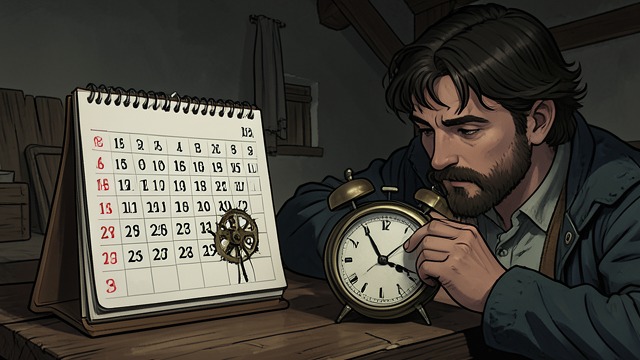
Pashka says he tracks dates on a calendar rather than exact time. He reminds Sergeyich that he failed to notice the date of Defender of the Fatherland Day while obsessing over the clock.
Different forms of endurance
Pashka’s calendar marks days survived; Sergeyich’s ticking clock organizes the present. Their difference shows two personal strategies for living without the larger structures of ordinary life.
A Village Loses Its Time
A Village Loses Its Time
A clock left behind
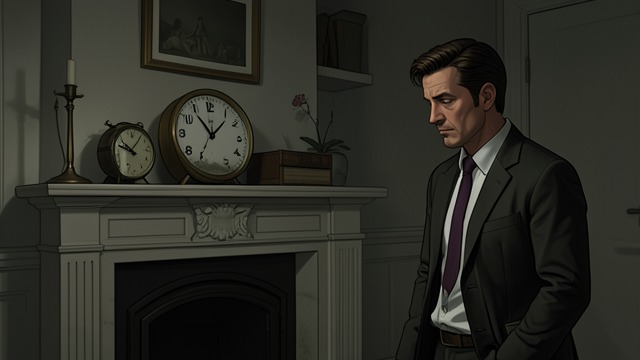
Sergeyich remembers that his own alarm clock remains in the house and will eventually stop. He decides not to turn back merely to keep it running.
Time belongs to the living
He wonders whether time disappears when no one remains to keep track of it. The thought links his departure to the village’s emptiness and to the uncertain possibility of return.
the winter visits to Pashka’s house
the day Sergeyich repairs Pashka’s door
as Sergeyich drives away from home
